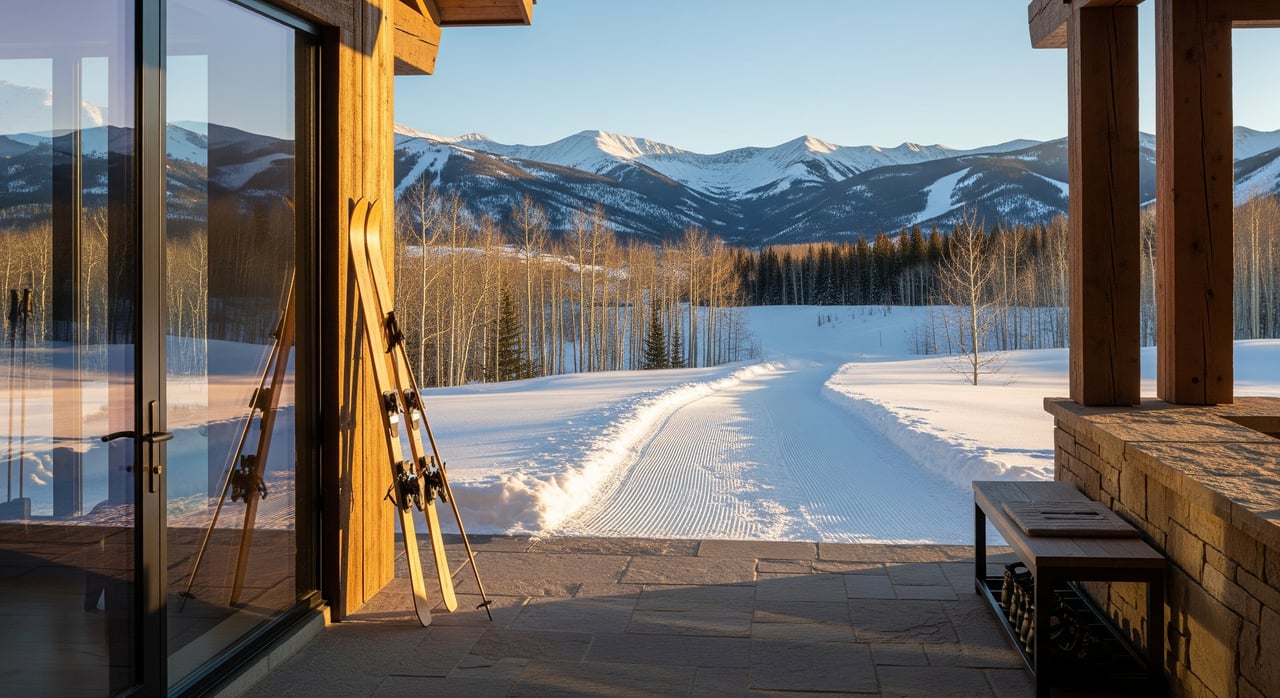
Picture this: you clip in on your deck, slide to a groomed lane, and drop straight onto a Breckenridge lift. Now compare that with carrying skis across a driveway, down a walkway, and over a plowed road. Both get you on snow, but only one is true ski-in/ski-out. If you are comparing listings across Breckenridge, getting this definition right will save you time and help you buy with confidence.
In this guide, you will learn what really qualifies as ski-in/ski-out, how access differs by peak and base area, and how that affects price, HOA costs, rentals, and day-to-day living. You will also get a simple verification checklist you can use on any listing. Let’s dive in.
What counts as true ski-in/ski-out
True ski-in/ski-out means you have a direct, skiable connection from your door to maintained resort terrain or a lift without using a vehicle or crossing public roads. In normal snow conditions, you should not need to carry skis or walk more than a few steps. The route should be a groomed or controlled approach, not an improvised path through trees.
Always confirm legal access in writing. Look for recorded easements or inclusion on official maps, especially if a private lane or path is involved. Access can be seasonal and depends on snow depth and resort operations, so reliability improves where snowmaking and grooming are present.
Common marketing terms and what they usually mean:
- Ski-in/ski-out: Expect door-to-slope access, but verify the route and easements.
- Ski access or ski adjacent: Often a short walk, stairs, a flat section that is hard in ski boots, or a small road crossing.
- Gondola-access or gondola-side: Convenient to the town gondola, but not ski-in/ski-out unless you can reach the unload area still on skis and continue on a skiable route.
- Slope-side: Near the runs or lift lines, though you may still have to walk or use stairs between your door and the snow.
How access varies across Breckenridge
Breckenridge spans Peaks 6 through 10, plus the historic downtown linked by a gondola and free shuttles. Geography, protected open space, and the resort’s lift network shape where true ski-in/ski-out is common.
Peak 8: the hub of door-to-slope
Peak 8 has the most consistent inventory of true ski-in/ski-out. Purpose-built base-area buildings sit beside maintained runs and lift unloads, so door-to-snow is common here. The town gondola connects Main Street to Peak 8, but properties near the gondola in town are better described as gondola-access rather than ski-in/ski-out.
Peak 9: easy access, verify building by building
Peak 9 is a major base village with lodging close to lifts and beginner-friendly terrain. Many buildings offer very easy access, while others include short walkways or stairs. Expect excellent convenience, but confirm the exact door-to-ski route for each building.
Peaks 6 and 7: mixed, residential, and advanced-terrain friendly
Neighborhoods on and around Peaks 6 and 7 bring you close to runs and higher-elevation terrain. Some properties feel nearly slope-side, yet true door-to-lift connections are less common than at Peak 8. Short walks, stairs, or reliance on the free town shuttle are typical.
Peak 10: fewer base-area options
Peak 10 leans more alpine with limited base development. It is less commonly marketed as traditional ski-in/ski-out. Expect to prioritize terrain access over classic base-village convenience here.
Downtown and Main Street: gondola convenience
Staying downtown gives you fast access to dining and shops plus quick gondola rides to the mountain. It is a great lifestyle mix, but most downtown properties are gondola-access rather than true ski-in/ski-out. You typically will not ski directly back to your door.
Local factors that change access reliability
Cucumber Gulch Preserve sits between Peaks 8 and 9 and is a protected wetlands and wildlife area. Environmental protections limit where ski lanes and connections can be built, which can force detours or require short walks or shuttle use from certain neighborhoods.
Resort operations and seasonal closures can gate routes for safety, grooming patterns, or wildlife protection. A connector shown on a map may close during part of the season. Runs with snowmaking tend to hold coverage longer, which supports more reliable access in early or late season. Higher elevation and favorable exposure usually extend spring reliability.
Price, costs, rentals, and lifestyle
Pricing and demand
True ski-in/ski-out carries a premium. Units that deliver reliable door-to-slope convenience often sell faster and draw interest from second-home buyers and investors. The size of the premium depends on building quality, peak location, and how direct the access is.
Ownership costs and HOA
Base-area and slope-side complexes often have higher HOA dues. Amenities like lobbies, on-site management, ski lockers, and robust snow removal add costs. Mountain-facing buildings can also see higher maintenance needs due to weather exposure and heavy winter use.
Rentals and regulations
Ski-in/ski-out units tend to see strong winter rental demand, which can offset higher purchase prices and fees. Actual income varies by building program, management, and season strength. Always check current town or county rules for licensing, permitted rental days, and registration requirements.
Lifestyle tradeoffs
Being steps from lifts is convenient, but you may see more skier traffic and peak-season noise. If summer is important, evaluate trail access, biking, and other warm-weather amenities too. Some base-area buildings reduce the need for a vehicle while others have limited or costly parking.
How to verify a listing’s claim
Use this simple process to confirm whether a property is truly ski-in/ski-out:
- Map the route
- Compare the resort trail map with satellite or parcel maps. Trace the path from the door to the nearest lift or groomed run.
- Confirm legal access
- Request recorded easements, plats, covenants, and HOA documents that show ski lanes and maintenance obligations. Look for permanent, recorded rights rather than temporary permissions.
- Check with operations
- Ask whether the resort recognizes the route, and whether gates, grooming plans, or closures affect it. Confirm if nearby runs have snowmaking that supports early and late season access.
- Test the path
- Visit during different snow conditions if possible or ask for recent photos or video. Walk the exact route with skis or a snowboard to assess stairs, flats, or road crossings.
- Clarify maintenance and risk
- Determine who maintains private approaches, bridges, or lanes and who pays for it. Review HOA insurance and your individual coverage needs.
- Review rental and HOA rules
- Verify if short-term rentals are allowed, how they are managed, and any occupancy limits or recent assessments.
Which area fits your goals
- You want true door-to-slope living and base amenities: Focus on Peak 8 and select Peak 9 buildings with direct groomed connections.
- You want top-tier convenience with more variety of buildings and budgets: Explore Peak 9, then compare specific buildings and access routes.
- You value a residential feel and proximity to advanced terrain: Consider neighborhoods around Peaks 6 and 7, keeping in mind mixed access and potential shuttle use.
- You prioritize alpine terrain over base-village energy: Look at Peak 10, understanding that traditional ski-in/ski-out is less common.
- You want vibrant downtown living with quick mountain access: Choose Main Street or surrounding areas with gondola access.
Ready to compare real listings
If you are weighing two or three buildings that all claim ski-in/ski-out, we can help you trace routes, request easements, and pressure test access in real conditions. Our team pairs neighborhood-level knowledge with hands-on due diligence so you can buy with clarity. When the right door-to-slope home appears, you will be ready.
Start your search with the local team that lives this market every day. Connect with Breckenridge Mountain Brokers to tour properties, review access documents, and build a plan that fits your lifestyle.
FAQs
What does “true ski-in/ski-out” mean in Breckenridge?
- It means a direct, skiable connection from your door to maintained resort terrain or a lift with no road crossings and no significant walking in normal snow conditions.
Is gondola-side the same as ski-in/ski-out in town?
- No, gondola-access is convenient but usually not ski-in/ski-out unless you reach the unload area on skis and continue on a skiable route.
Which Breckenridge peak has the most true ski-in/ski-out?
- Peak 8 stands out for consistent door-to-slope inventory thanks to purpose-built base-area lodging near runs and lift unloads.
How does Cucumber Gulch affect ski access near Peaks 8 and 9?
- Environmental protections limit where connectors can be built, which can add short walks or require shuttle use in some neighborhoods.
Do ski-in/ski-out condos command a price premium?
- Yes, reliable door-to-slope access typically adds value, draws strong demand, and can improve resale liquidity in peak seasons.
Are HOA dues usually higher for slope-side buildings?
- Often yes, since on-site amenities, management, and robust snow removal increase operating costs that are shared through HOA fees.
Will ski-in/ski-out improve rental performance in winter?
- It commonly boosts winter demand, but actual income depends on building management, unit quality, and the strength of the season.
How can I confirm legal ski access before buying?
- Request recorded easements and plats, review HOA documents for maintenance obligations, and verify the route with resort operations before you close.