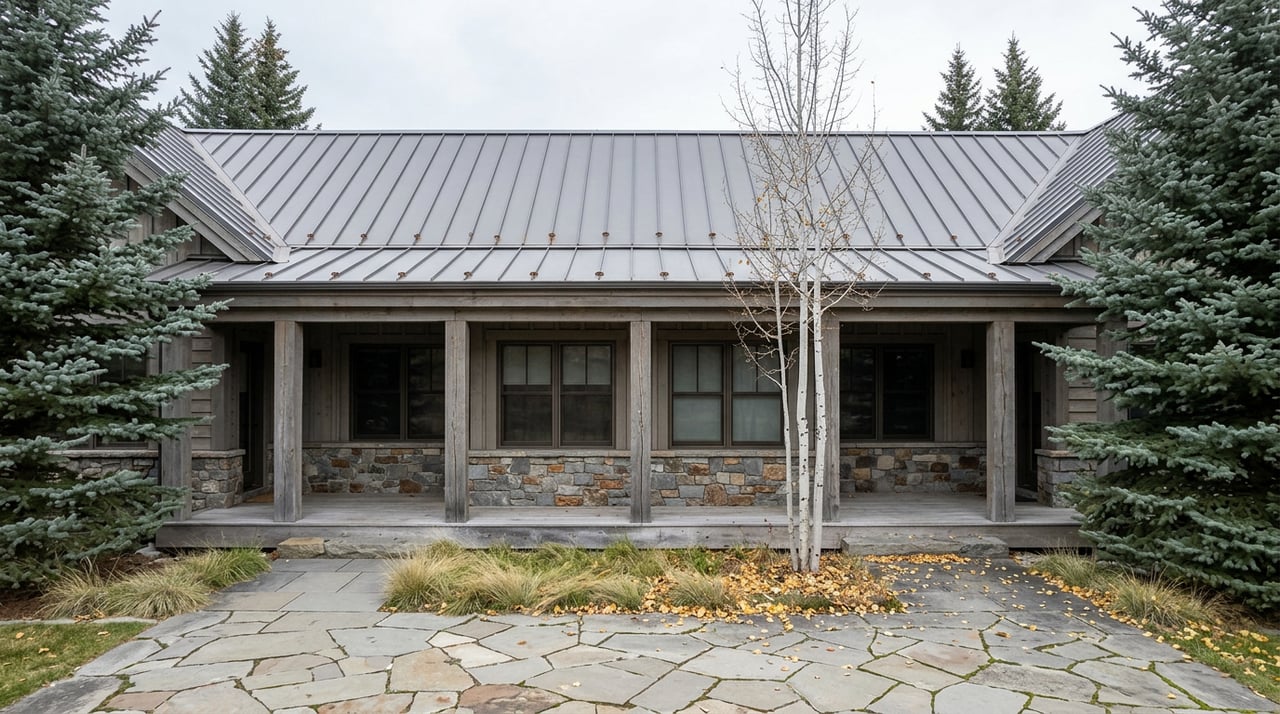
Two condos, both listed with a Dillon, CO address, both a short walk from the water. One owner can apply for a short-term rental license the week after closing, no waitlist, no cap. The other owner's application goes into a queue that may or may not open this year, because the building sits in unincorporated Summit County, not the Town of Dillon, even though the mail carrier never seems to notice the difference.
That gap is not a rumor. It is written into the Town of Dillon's own short-term rental guidance, which states plainly that Dillon Valley, Summit Cove, Summerwood, and Keystone are not inside Dillon town limits, no matter what the mailing address says. Buyers comparing two "Dillon" listings on price per square foot are often comparing two different regulatory worlds without knowing it.
This year that mismatch has company. A second assumption, that a lake-facing address means lake access, has taken a hit from something no HOA brochure could have predicted: 2026 is shaping up as one of the driest years Dillon Reservoir has seen since the early 2000s, and the marina system that made "lakefront" mean something now has a waitlist where a slip used to be.
Your Mailing Address Was Never the Jurisdiction
The Town of Dillon's short-term rental FAQ is unusually direct about this. It tells applicants outright that Dillon town limits are not determined by zip code, and that Dillon Valley, Keystone, Summerwood, and Summit Cove sit in unincorporated Summit County, where a completely separate set of rules applies. Anyone unsure which bucket a property falls into is pointed to the Summit County Assessor's GIS parcel map to check.
Why does this matter for underwriting a purchase? Because the two regimes behave nothing alike. The actual Town of Dillon has kept its licensing process open, without the caps or waitlists that have become common elsewhere in the county. Unincorporated Summit County, by contrast, manages short-term rentals through basin-based caps that limit licenses to a set percentage of housing units in each zone, with tighter basins allowing only a single-digit share of units to hold a license at all. A buyer who assumes "Dillon" means one thing is really choosing between an open door and a line that may not move for years.
There is a third wrinkle. Keystone became its own incorporated town in February 2024 and took over its own short-term rental licensing from the county the following September, meaning a property that once fell under county caps may now sit under Keystone's own, separately administered rules. A Dillon-addressed condo could be governed by any of three distinct systems: the Town of Dillon, unincorporated Summit County, or the Town of Keystone, and the address on the listing tells you none of it.
| Where the property actually sits | Who regulates it | What that means for a buyer |
|---|---|---|
| Town of Dillon (confirmed by parcel, not zip code) | Town of Dillon | No license cap or waitlist as of this writing; renewal deadlines and lodging tax filings still apply |
| Dillon Valley, Summit Cove, Summerwood (unincorporated) | Summit County | Licenses capped by drainage basin; some zones allow only a small share of units to hold a license |
| Keystone (incorporated 2024) | Town of Keystone | Separate licensing process since September 2024, administered independently of both Dillon and the county |
The Marina Line on the Listing Sheet
The second surprise sits at the water's edge. Dillon Reservoir is Denver Water's largest, opened in 1963, and by the utility's own account it stores roughly 38 percent of the system's supply. That makes it sensitive to exactly the kind of winter Colorado just had. Statewide snowpack peaked at its lowest level since 1981, and Denver Water declared a Stage 1 drought response in March 2026, the first since 2013.
The numbers tracked through the summer. By late July, Dillon Reservoir was already down more than 22 feet from full, with Denver Water projecting another 8 to 10 feet of decline by Labor Day. As of September 16, 2026, live reservoir tracking puts storage at roughly 77 percent of the historical average for this date, and Denver Water's own outlook has the reservoir bottoming out around 60 percent of capacity by next April, a level not seen since the 2002-03 drought bottomed out at 48 percent.
The marina system built around that water has adjusted accordingly. Dillon Marina currently has no slips available for the 2026 season. The only way in is a waitlist, with a $150 fee for a first list and $25 for each additional one, refundable after a boater's second full season. Just across the reservoir, the Town of Frisco made a harder call: Frisco Bay Marina closed its entire slip system for 2026 and ended powerboat and paddle sport rentals for the season, citing the same drought conditions.
None of this means the lake disappeared. Dillon Marina's launch ramp stayed open to the public through the season, and short-term slip rentals were still available with a reservation. But the specific promise that draws buyers to lakefront pricing, the idea that owning nearby means a boat slip is yours for the asking, has not been true this year for anyone new to the waitlist.
What This Means If You're Comparing Dillon to Its Neighbors
None of this is a reason to avoid Dillon. Droughts end, reservoirs refill, and the 2002-03 low eventually gave way to normal years again. The point is narrower and more useful: the median price on a Dillon listing bundles together a set of rights and access points that are not uniform across the town, and two of the biggest variables, whether you can rent the unit short-term and whether you can actually put a boat in the water, depend on facts the listing photo cannot show you.
For a rental-income buyer, that means the underwriting has to start with jurisdiction, not price. A unit inside actual Dillon town limits currently offers a more open licensing path than an identically priced unit a few blocks away in Dillon Valley or Summit Cove. For a buyer drawn to the marina lifestyle, it means asking Dillon Marina directly about slip waitlist position rather than assuming an HOA's marketing language about "lake access" includes a slip.
The reservoir will recover on its own timeline. The jurisdiction question will not resolve itself, and it is worth checking before an offer goes in, not after closing.
A Short Checklist Before You Write an Offer
- Confirm the parcel's actual jurisdiction using the Summit County Assessor's GIS parcel map rather than relying on the mailing address.
- Ask the listing agent directly whether the property's short-term rental license, if any, is capped, waitlisted, or currently unrestricted, and get it in writing.
- Call Dillon Marina or Frisco Bay Marina directly to ask about slip waitlist position for the specific address, rather than assuming a marina view means marina access.
- Review the HOA's parking and rental provisions alongside whatever town or county STR rules apply, since the two sets of rules can conflict.
- If rental income is part of the pro forma, model a season without guaranteed water access rather than assuming this year's marina conditions were a one-off.
A Few Questions Buyers Keep Asking
Does a condo near the marina come with a boat slip? Not automatically. Slips at Dillon Marina are managed separately through the town's own waitlist system, and as of this year there are no slips available for new applicants regardless of which condo building you buy into.
Will the drought conditions last? Denver Water's own projections have reservoir storage recovering only with a winter of well above average snowpack, and the utility has been clear that one good storm will not reverse a season this dry. Past droughts, including 2002-03, did eventually give way to normal years, but the timeline depends on winters yet to come.
If my building is in Dillon Valley or Summit Cove, can I still get a short-term rental license? Possibly, but through Summit County rather than the Town of Dillon, and subject to that basin's specific cap. It is worth checking current availability before assuming the license will be there when you need it.
Buying near the water in Summit County still means something real: quiet mornings, easy access to the reservoir trail system, and a setting that draws people back year after year. It just means something specific to the parcel, not the zip code. If you are comparing Dillon to Keystone, Frisco, or Silverthorne and want someone to run the jurisdiction and rental math before you make an offer, Breckenridge Mountain Brokers can walk the parcel details with you and help you start your mountain home search with the right questions already answered.